
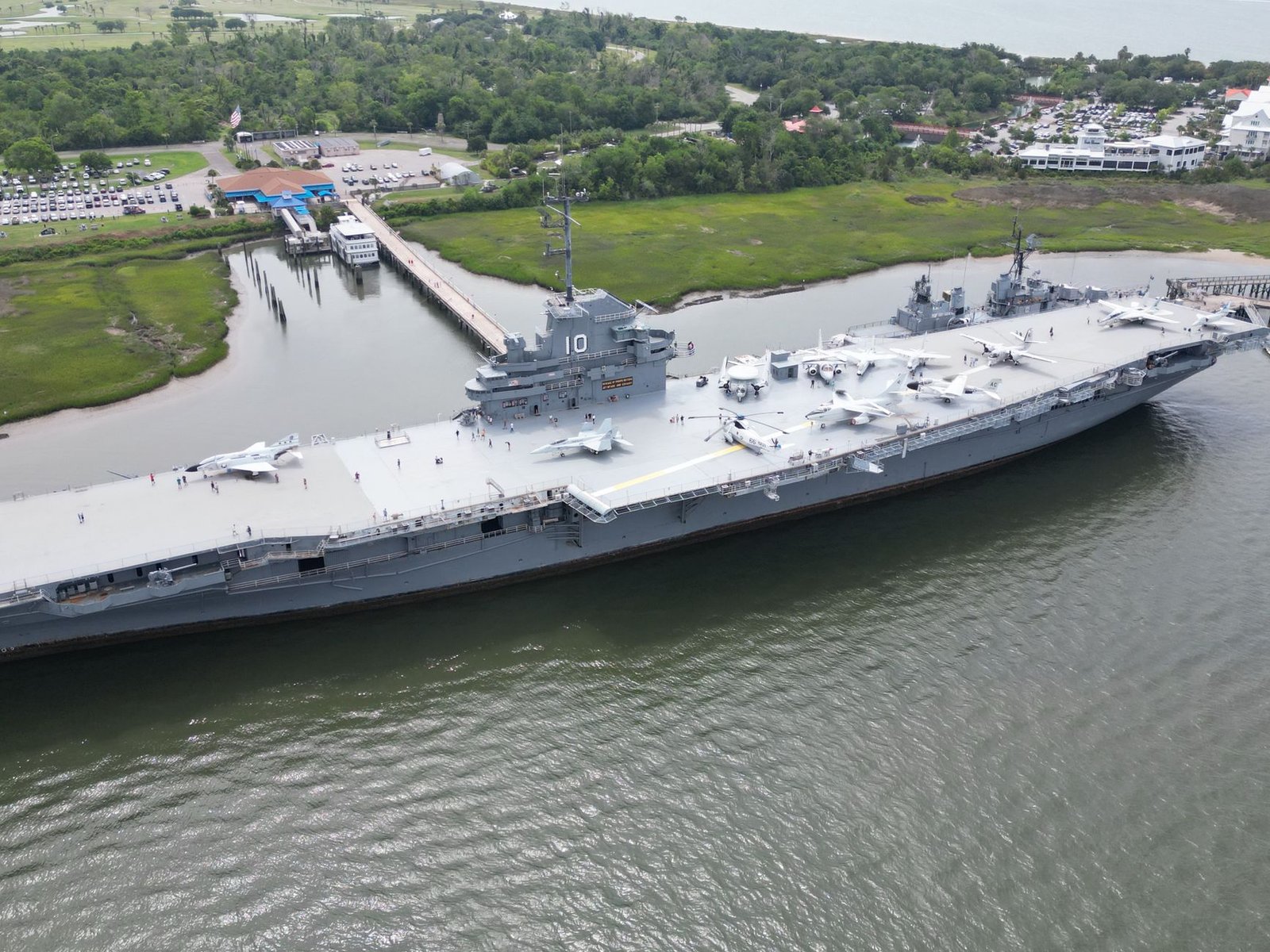
The USS Abraham Lincoln, one of the U.S. Navy’s most formidable aircraft carriers, pulled into port in Thailand after an extended 286-day deployment at sea, arriving with visible signs of the harsh maritime environment it had endured. While the massive vessel’s exterior showed considerable rust and weathering from prolonged ocean exposure, the carrier remained fully operational and combat-ready, demonstrating the resilience of modern naval engineering and the dedication of its crew.
The Physical Toll of Extended Naval Operations
After nearly nine months of continuous operations on the open ocean, the USS Abraham Lincoln’s hull and superstructure bore the unmistakable marks of saltwater corrosion and relentless sun exposure. The rust patterns visible on the carrier’s exterior served as a testament to the demanding conditions faced by naval vessels during extended deployments. Despite its weathered appearance, the ship’s structural integrity remained sound, and all critical systems continued to function at peak performance levels.
Naval engineers design carriers like the Abraham Lincoln to withstand years of exposure to marine environments, incorporating specialized coatings and maintenance protocols to protect against corrosion. However, the visible deterioration after 286 days at sea highlighted the ongoing challenge of maintaining these massive vessels in optimal condition during prolonged deployments. The carrier’s crew had implemented regular maintenance schedules throughout the deployment, but the sheer duration of the mission meant that comprehensive restoration work would be necessary during port calls and scheduled maintenance periods.
Operational Capability Unaffected by Appearance
The weathered exterior of the USS Abraham Lincoln belied its true operational status. The carrier’s propulsion systems, radar arrays, weapons systems, and aircraft launch capabilities all remained fully functional and ready for immediate deployment if needed. This distinction between cosmetic wear and operational readiness is crucial in understanding modern military vessels—appearance does not determine capability.
The Abraham Lincoln’s air wing, consisting of multiple squadrons of fighter jets, helicopters, and support aircraft, had maintained peak readiness throughout the deployment. The carrier’s advanced combat systems, electronic warfare capabilities, and integrated defense mechanisms continued to provide the U.S. Navy with a formidable power projection platform in the Indo-Pacific region. The vessel’s arrival in Thailand represented not a diminished capability but rather a continuation of strategic naval presence in one of the world’s most important maritime regions.
Strategic Importance of the Deployment
The extended 286-day deployment of the USS Abraham Lincoln underscored the U.S. Navy’s commitment to maintaining freedom of navigation and stability in the Indo-Pacific. Thailand’s strategic location along major shipping lanes and its importance as a regional ally made the port call particularly significant. The carrier’s presence demonstrated American resolve to support regional partners and maintain the international rules-based order in critical waterways.
For those interested in understanding modern military technology and logistics, military technology developments provide valuable context for how advanced systems operate in challenging environments. Similarly, understanding engineering principles helps explain how massive structures like aircraft carriers maintain functionality despite harsh conditions.
Maintenance and Port Operations
The Thailand port call provided an opportunity for the USS Abraham Lincoln’s crew to conduct essential maintenance and allow personnel to enjoy well-deserved shore leave. While cosmetic restoration of the hull would require more extensive work in dedicated shipyard facilities, the port visit allowed for critical system inspections, supply replenishment, and crew morale activities. The carrier’s engineering teams used this time to address any maintenance items identified during the extended deployment.
Naval logistics operations at ports like Thailand’s require sophisticated coordination between ship personnel, port authorities, and supply chain management. The process of resupplying a carrier strike group involves thousands of tons of fuel, provisions, spare parts, and ammunition, representing one of the most complex logistical undertakings in modern military operations.
The Reality of Naval Operations
The appearance of the USS Abraham Lincoln upon arrival in Thailand perfectly illustrated a fundamental principle of naval operations: the difference between aesthetic condition and operational readiness. Military vessels are tools designed for function first and foremost, with maintenance focused on preserving capability rather than maintaining showroom appearance. The rust and weathering visible on the carrier’s hull represented the honest wear of a warship actively serving national defense interests.
The 286-day deployment cycle reflects the demanding schedule required to maintain continuous naval presence across vast ocean regions. For those interested in learning more about complex systems operating in challenging environments, advanced systems engineering explores how technology performs under extreme conditions. The USS Abraham Lincoln’s arrival in Thailand, despite its weathered appearance, confirmed that American naval power remains a constant and reliable presence in the Indo-Pacific region.