
Some bolts just won’t budge with a regular wrench, no matter how much muscle you put into it. That’s when a torque multiplier steps in, turning a modest hand input into hundreds or even thousands of pound-feet of controlled force. This guide breaks down what the tool is, how it works, and when it actually makes sense to use one.
- What Is a Torque Multiplier?
- How Does a Torque Multiplier Work?
- What Are the Main Types of Torque Multipliers?
- When Should You Use a Torque Multiplier?
- How Do You Calculate Torque Multiplier Output?
- What Are the Benefits of Using a Torque Multiplier?
- What Are the Limitations to Know?
- Torque Multiplier vs Torque Wrench vs Impact Wrench: What's the Difference?
- How Do You Choose the Right Torque Multiplier?
- Bottom Line
Torque Multiplier at a Glance
- Function: Increases output torque using gear reduction
- Common Ratios: 4:1, 10:1, 20:1, up to 125:1
- Used For: Large bolts on trucks, wind turbines, presses, flanges
- Input Method: Hand torque wrench or pneumatic/hydraulic drive
- Max Output: Can exceed 20,000 Nm depending on model
This guide is based on publicly available mechanical engineering references, manufacturer specifications, and standard torque tool documentation available at the time of publication.
What Is a Torque Multiplier?
A torque multiplier is a mechanical tool that increases the output torque delivered to a fastener using internal gear reduction. A technician applies a smaller, manageable input torque at one end, and the tool’s gear train multiplies that force before it reaches the bolt or nut on the other end.
These tools are built for jobs where fasteners need extremely high torque values that a standard wrench or even a long breaker bar cannot safely achieve. Think large flange bolts on industrial equipment, heavy truck wheel lugs, or structural connections on machinery.
How Does a Torque Multiplier Work?
It works through a planetary gear system that reduces speed while increasing force. Inside the housing, a series of gears step down the rotational speed coming from the input shaft. Since torque and speed have an inverse relationship in a gear train, reducing speed increases torque proportionally.
For example, a multiplier with a 20:1 ratio takes 50 Nm of input torque and turns it into roughly 1,000 Nm of output torque, minus some loss from friction inside the gears. A reaction arm or backup bar is used to anchor the tool against a fixed point, preventing the body of the multiplier from spinning along with the output.
What Are the Main Types of Torque Multipliers?
There are three common types: manual, pneumatic, and hydraulic torque multipliers. Each is built for a different combination of torque range, speed, and work environment.
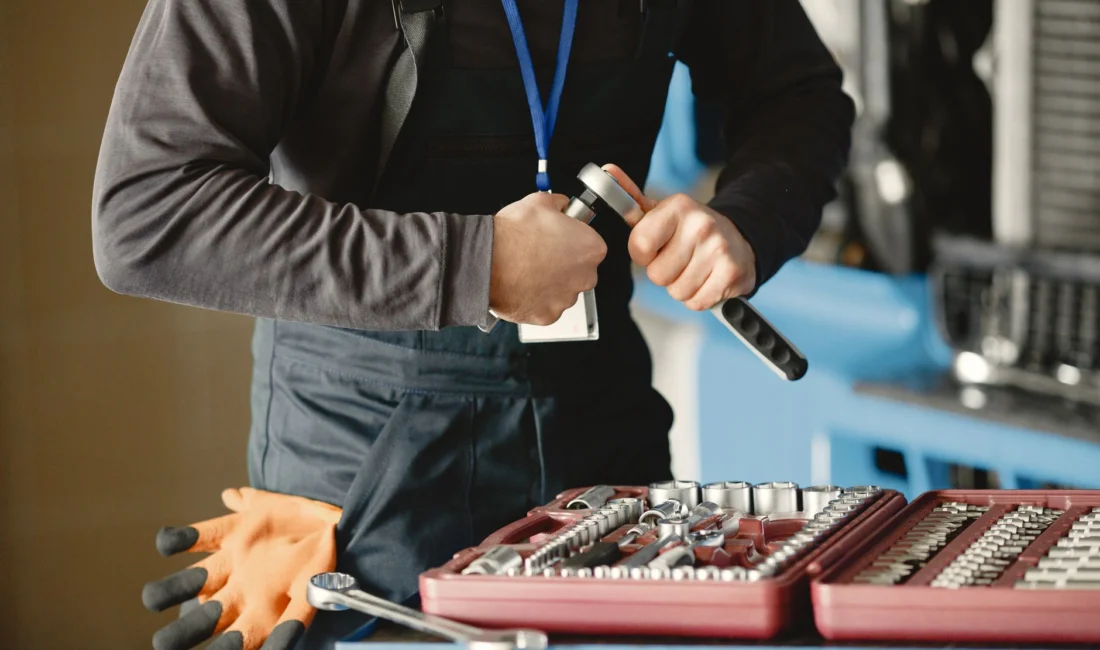
Manual torque multipliers are driven by hand using a torque wrench or ratchet as the input. They’re compact, affordable, and ideal for field repairs or occasional heavy-torque jobs.
Pneumatic torque multipliers use compressed air to drive the gear system, which speeds up repetitive tasks like assembly line bolting or fleet maintenance.
Hydraulic torque multipliers (often called hydraulic torque wrenches) deliver the highest output, sometimes exceeding 20,000 Nm, and are used in heavy industry such as wind energy, oil and gas, and large-scale construction.
When Should You Use a Torque Multiplier?
Use a torque multiplier whenever a fastener’s required torque spec is beyond what a standard wrench can safely or accurately achieve. Common applications include truck and trailer wheel lugs, industrial flange bolts, large machinery mounts, and structural steel connections.
It’s also useful in situations where space is tight and a long breaker bar simply won’t fit. Because the tool multiplies force through gearing rather than leverage length, it can generate massive torque in a compact footprint.
Where Torque Multipliers Get Used
- Heavy truck and trailer wheel assembly
- Wind turbine tower bolting
- Large industrial flanges and pressure vessels
- Construction equipment maintenance
- Shipbuilding and marine engine mounts
How Do You Calculate Torque Multiplier Output?
You calculate output torque by multiplying the input torque by the tool’s gear ratio, then subtracting a small percentage for mechanical efficiency loss. The basic formula looks like this: Output Torque = Input Torque x Ratio x Efficiency.
Most multipliers run at around 90 to 95 percent efficiency because of internal friction in the gear train. So if you apply 40 Nm into a 25:1 multiplier with 92 percent efficiency, the real output comes out to roughly 920 Nm instead of the theoretical 1,000 Nm.
What Are the Benefits of Using a Torque Multiplier?
The biggest benefit is safe, accurate access to extremely high torque without needing brute strength or oversized tools. A technician can apply precise, repeatable force using body-safe effort while the gear system does the heavy lifting.
Other advantages include compact size compared to long breaker bars, reduced risk of over-torquing damage, and better consistency across multiple fasteners, which matters a lot on jobs with strict torque specs like aircraft components or pressure vessels.
What Are the Limitations to Know?
The main limitation is speed. Because gear reduction trades speed for torque, tightening a single large bolt can take noticeably longer than with an impact wrench.
Reaction arm placement is another factor. The tool needs a stable anchor point to work against, and in tight or awkward spaces, finding that anchor point isn’t always simple. Cost is also worth mentioning since quality multipliers, especially hydraulic ones, carry a higher price tag than standard torque wrenches.
Torque Multiplier vs Torque Wrench vs Impact Wrench: What’s the Difference?
A torque multiplier increases force through gearing, a torque wrench measures and limits applied force, and an impact wrench delivers rapid rotational bursts for speed. Each tool serves a different purpose in a mechanic’s toolbox.
| Tool | Primary Use | Torque Range | Speed |
|---|---|---|---|
| Torque Multiplier | Extremely high torque fasteners | Up to 20,000+ Nm | Slow |
| Torque Wrench | Precise, measured tightening | Up to around 1,000 Nm | Moderate |
| Impact Wrench | Fast removal and installation | Up to around 2,000 Nm | Fast |
How Do You Choose the Right Torque Multiplier?
Choose based on your required output torque, available input source, and the physical space you’re working in. Start by checking the manufacturer’s torque spec for the fastener, then pick a multiplier ratio that comfortably covers that number with room to spare.
Also consider the drive type. Manual units work fine for occasional jobs, pneumatic suits shops doing repetitive work, and hydraulic models are built for the heaviest industrial applications. Don’t forget to check reaction arm compatibility with your workspace before buying.
Bottom Line
A torque multiplier earns its place in a mechanic’s toolkit whenever a fastener demands more force than hands, arms, or standard wrenches can safely deliver. It trades speed for precision and power, making it the go-to tool for heavy trucks, industrial equipment, and large structural bolts. Pick the right ratio and drive type for the job, and it turns an impossible bolt into a routine one.