
Long before the Tesla Model S turned a giant touchscreen into a must-have feature, BMW was already experimenting with the idea. The automaker’s Z22 research concept, unveiled around 1999, ditched traditional gauges and mirrors for screens and cameras, a full 13 years before Tesla’s flagship sedan reached its first buyers.
A Cabin Built Around a Screen, Not Switches
The Z22 wasn’t designed to be sold in showrooms. It was a rolling test bed for ideas BMW’s engineers wanted to explore before committing to production. The most striking of those ideas was placing a central screen at the heart of the dashboard, controlling functions that would normally be handled by physical buttons and dials.
This was a radical departure for the late 1990s, when most cars still relied on analog gauges, knobs, and switches for nearly everything. BMW’s thinking was that digital displays could simplify the driving experience by consolidating controls into one place, while also opening the door to features that hardware alone couldn’t easily provide, like customizable layouts or software updates.
It’s the same logic Tesla would use over a decade later, when the Model S arrived in 2012 with a 17-inch touchscreen dominating its center console. Tesla got the credit for popularizing the idea, but BMW had already proven the concept was possible years earlier.
Cameras Instead of Mirrors
The Z22 didn’t stop at the dashboard. BMW also replaced the car’s traditional side mirrors with cameras, feeding video to interior displays instead of relying on glass and reflections. This was another idea considered wildly ahead of its time. Camera-based mirror systems wouldn’t start appearing on production cars until decades later, and even now they remain a rarity due to regulatory hurdles in markets like the United States.
The benefits BMW was chasing are the same ones automakers point to today: better aerodynamics, reduced blind spots, and a cleaner exterior design. Digital mirrors can also adjust automatically for glare and low-light conditions, something a simple piece of glass can’t do on its own.
Why BMW Never Built It
Despite how forward-thinking the Z22 was, BMW never intended to put it into production as shown. Concepts like this exist to test technology, gauge public reaction, and give engineers a chance to fail safely before ideas make their way into real vehicles. Many of the systems in the Z22 were simply too expensive, too unreliable, or too far removed from what regulators and customers were ready to accept in 1999.
Touchscreens back then were slow, camera sensors couldn’t yet match the clarity and reliability of glass mirrors, and the cost of putting this kind of technology into a mass-market car would have been enormous. BMW shelved the ideas, but it clearly didn’t forget them.
The Slow March Toward Today’s Screens
It took the better part of two decades for the auto industry to catch up to what BMW was testing with the Z22. Touchscreen costs dropped, processing power increased, and consumers grew used to interacting with screens on their phones long before large infotainment displays became common in cars.
Tesla deserves credit for pushing the industry to embrace screen-centric interiors at scale, but the Z22 shows that the idea didn’t start with them. BMW was willing to explore it years earlier, even if the technology of the time wasn’t ready to support it in a production car.
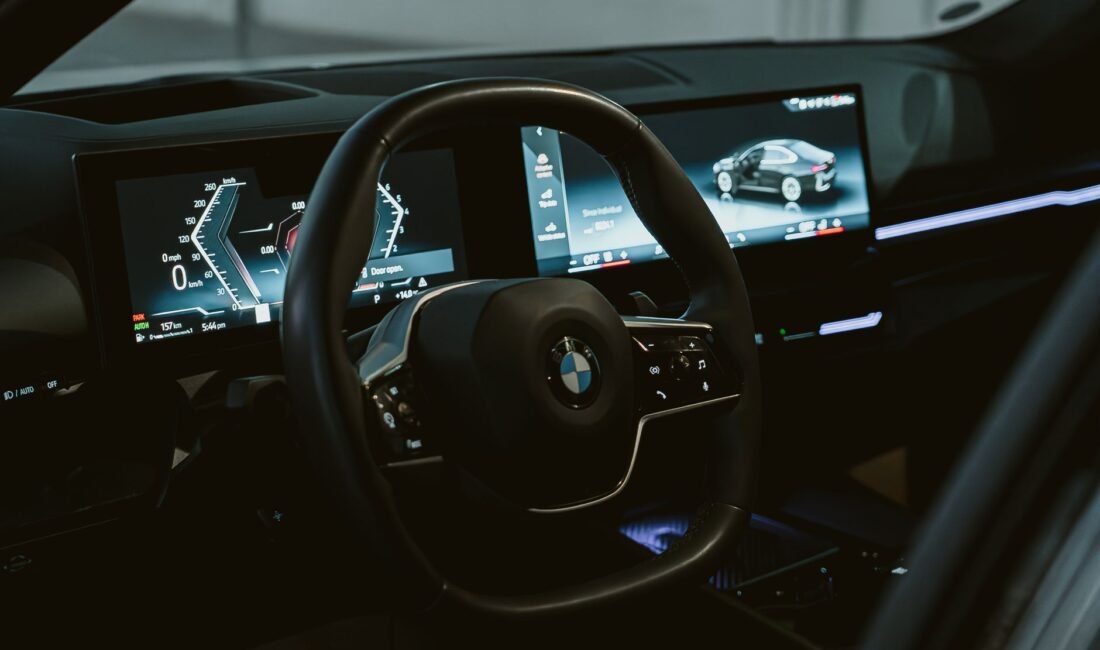
Today, BMW’s own lineup reflects how far this thinking has evolved. The company’s curved display setup, which merges a digital gauge cluster with a central touchscreen, is a direct descendant of the same philosophy the Z22 explored: fewer physical buttons, more software-driven control, and a cabin that can be updated and reconfigured over time.
Concepts That Quietly Shape the Future
The Z22 is a reminder that many of the ideas we consider modern breakthroughs often started as forgotten concept cars sitting in a design studio years earlier. Automakers routinely build these research vehicles not to sell them, but to learn from them. Some ideas get scrapped entirely, while others resurface once technology, cost, and consumer expectations finally align.
In this case, BMW’s screen-first cabin and camera-based mirrors were ahead of their time by more than a decade. It took Tesla, along with massive advances in display technology and manufacturing costs, to bring similar ideas to the mainstream. But the Z22 stands as proof that BMW saw this future coming long before most of the industry did.