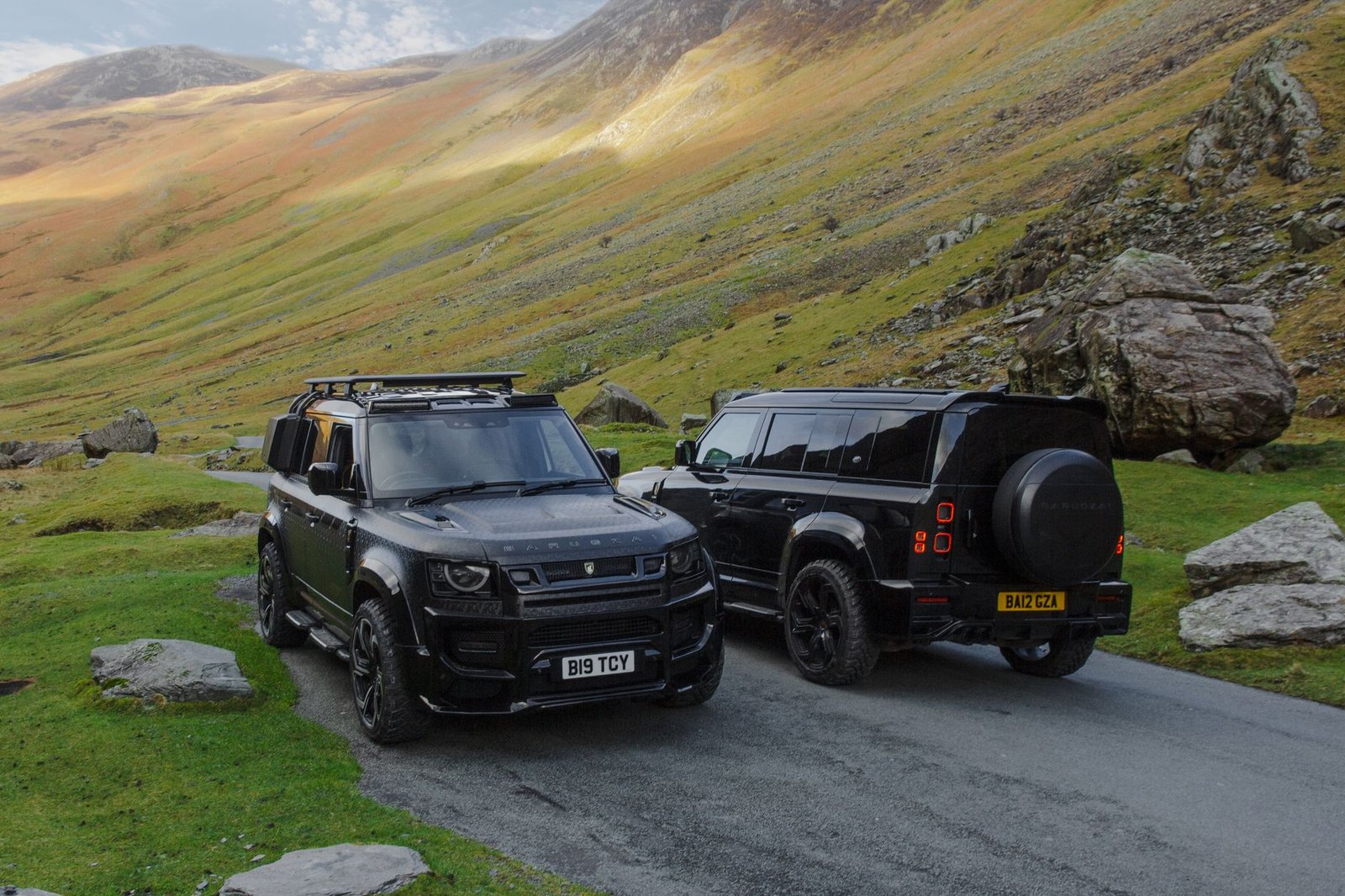
Land Rover has pulled back the curtain on its latest military machine, and it’s every bit as tough as it looks. Called the Wolf Series II, this new lineup takes the civilian Defender’s bones and turns them into something built for combat zones rather than school runs.
The Wolf name isn’t new. British armed forces have used Wolf-badged Land Rovers since the 1990s, originally based on the old Defender 110. This time around, Land Rover has rebuilt the concept from scratch using the modern Defender’s D7X monocoque platform, the same aluminum-intensive architecture underpinning the road-going SUV sold in showrooms today.
Two Very Different Builds
The Wolf Series II arrives in two distinct forms. The first is a single-cab pickup truck, stripped of the creature comforts you’d find in a retail Defender and replaced with a rugged cargo bed suited for hauling gear, weapons systems, or supplies across rough terrain. The second variant is far more radical: an open-air buggy with no roof, no doors, and minimal bodywork, designed for rapid insertion missions where speed and maneuverability matter more than protection.
Both vehicles share the same underlying structure, but their missions couldn’t be more different. The pickup is built for logistics and support roles, moving personnel and equipment where wheeled vehicles are the only option. The buggy, on the other hand, looks purpose-built for special forces units that need to move fast and light, dropping troops into position before disappearing just as quickly.
Why the D7X Platform Matters
Land Rover’s decision to base the Wolf Series II on the D7X platform isn’t just about parts-sharing convenience. The monocoque design is significantly stiffer than traditional body-on-frame construction, which pays off in torsional rigidity when the vehicle is scrambling over rocks, ruts, and uneven battlefield terrain. It also shaves weight compared to older military Land Rovers, a detail that matters when troops need to airlift these vehicles into remote locations.
That stiffness also makes the platform easier to adapt. Military planners often need one base vehicle that can be reconfigured into troop carriers, ambulances, weapons platforms, or reconnaissance vehicles without redesigning the entire chassis every time. The D7X architecture gives Land Rover that flexibility while keeping production costs more manageable than building a fully bespoke military platform from the ground up.
Built to Take a Beating
Don’t expect the plush leather and touchscreen infotainment you’d find in a modern Defender 110 or 130. The Wolf Series II strips away anything that doesn’t serve a tactical purpose. Reinforced underbody protection, raised air intakes for water fording, and heavy-duty suspension components are the priorities here, not ambient lighting or massage seats.
Ground clearance and approach and departure angles have reportedly been tuned specifically for military use, allowing the vehicle to tackle obstacles that would stop a standard Defender in its tracks. Off-road capability was never a weak point for the Defender lineup, but the Wolf variants push that further with hardware changes aimed squarely at combat conditions rather than weekend trail driving.
A Long History of Military Service
Land Rover has supplied vehicles to military forces for decades, and the original Wolf became a familiar sight with British and NATO forces throughout the 2000s. Those vehicles earned a reputation for reliability in harsh environments, from desert deployments to cold-weather operations. The Wolf Series II seems designed to carry that legacy forward while catching up to modern engineering standards.
Details on powertrain options remain limited, but given the current Defender’s engine lineup includes efficient diesel and mild-hybrid options alongside more powerful gas engines, it’s likely the military variants will draw from a similar pool, tuned for durability and fuel efficiency over outright speed.
What This Means for Land Rover
Building military vehicles isn’t just a prestige project for Land Rover. Defense contracts offer stable, long-term revenue that doesn’t depend on shifting consumer tastes or economic cycles the way retail SUV sales do. If the Wolf Series II earns adoption from NATO members or other allied forces, it could become a steady business line for years to come.
It also reinforces the Defender name’s original purpose. Before it became a fashionable city SUV, the Defender was a go-anywhere workhorse built for farmers, explorers, and armed forces. The Wolf Series II feels like a return to that identity, proving the new platform can handle serious duty beyond grocery runs and school pickups.
Whether these vehicles end up patrolling remote borders or supporting humanitarian missions, the Wolf Series II shows Land Rover hasn’t forgotten where the Defender name came from, even as its civilian counterpart leans further into luxury.