
Electric vehicles have officially shifted from a niche novelty to mainstream automotive dominance. Yet, for all their rapid acceleration and zero-emissions appeal, traditional lithium-ion battery technology still carries inherent compromises. Range anxiety, prolonged charging stopovers, thermal runaway risks, and excess weight remain persistent bottlenecks for manufacturers. Enter solid-state batteries—the long-promised holy grail of energy storage poised to redefine the future of automotive propulsion.
Understanding Solid-State Technology
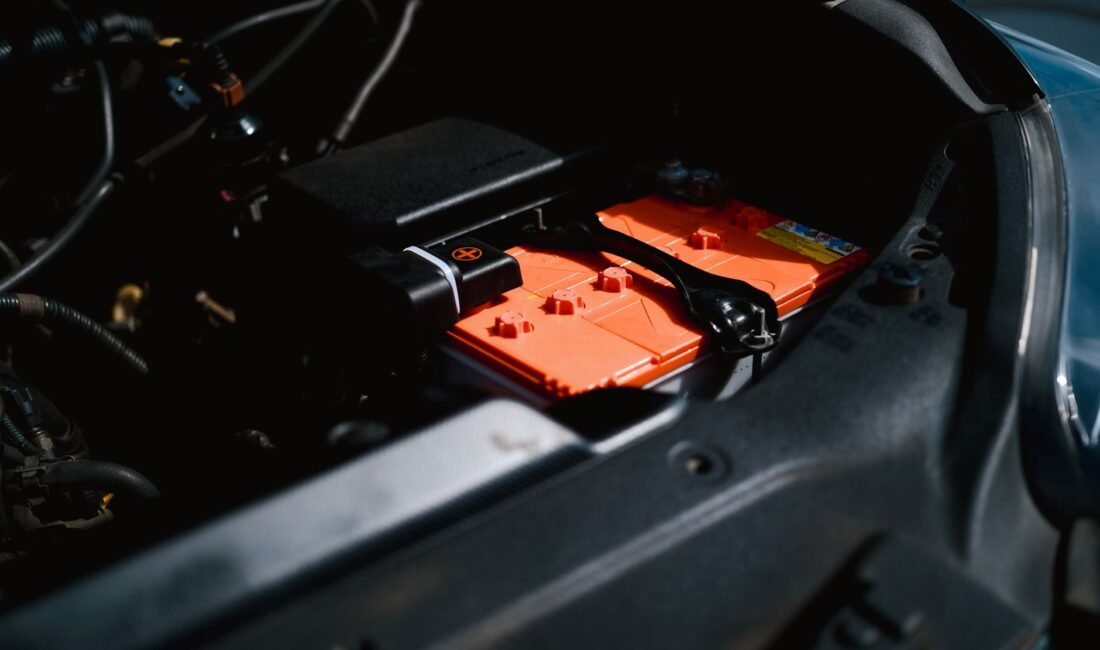
To appreciate the revolutionary nature of solid-state cells, one must first look at what powers today’s electric cars. Standard lithium-ion batteries rely on a liquid or gel electrolyte to transport lithium ions between the anode and cathode. While effective, this liquid solution is flammable, volatile under extreme temperatures, and limited in its total energy density.
Solid-state batteries replace this liquid electrolyte with a solid material, such as ceramics, glass, or solid polymers. This structural change fundamentally alters how energy is stored and transferred. By eliminating liquid components, engineers can utilize advanced lithium-metal anodes, drastically increasing energy density while significantly reducing the physical footprint of the battery pack.
Key Breakthroughs: Why Solid-State Matters
Extended Driving Range
Energy density is the primary benchmark for automotive efficiency. Solid-state batteries offer up to double the energy density by volume compared to conventional lithium-ion cells. For drivers, this translates directly to substantial range gains. An EV currently capable of 300 miles on a full charge could potentially achieve 600 miles or more using a solid-state pack of identical physical dimensions and weight.
Hyper-Fast Charging Times
One of the most significant friction points for potential EV buyers is charging duration. Current high-speed DC fast chargers require 20 to 40 minutes to replenish a pack from 10% to 80%. Solid-state architecture allows for much higher current throughput without generating destructive internal heat. Under optimal conditions, solid-state batteries promise 10% to 80% recharge times in as little as 10 to 15 minutes, rivaling traditional gas pump stops.
Superior Thermal Stability and Safety
Because liquid electrolytes are inherently flammable, physical damage or internal short circuits in lithium-ion packs can cause catastrophic thermal runaway. Solid electrolytes are non-flammable and far more resistant to extreme temperature spikes, virtually eliminating battery fire risks under severe operation or collision conditions.
Obstacles on the Road to Mass Production
If solid-state technology is so transformative, why aren’t these batteries in every showroom model today? The answer lies in manufacturing scalability and material science. Developing a solid electrolyte that maintains consistent contact with electrodes over thousands of expansion and contraction cycles is extraordinarily difficult. Microscopic needle-like lithium formations called dendrites can still form and cause internal shorts if not properly controlled.
Furthermore, building cleanroom facilities capable of mass-producing solid-state cells at competitive cost levels requires billions of dollars in capital investment. Automotive giants like Toyota, Nissan, and BMW, alongside tech innovators like QuantumScape and Solid Power, are pouring vast resources into solving these exact scaling challenges.
The Horizon: When Will They Arrive?
Most industry analysts and automakers project small-scale pilot production to hit premium vehicle lineups between 2026 and 2028. Widespread adoption across mainstream, affordable electric vehicles is expected to materialize closer to 2030. When it arrives, solid-state technology won’t just improve electric vehicles; it will fundamentally end the debate over whether electric power can completely surpass the internal combustion engine.