A timing belt doesn’t send a warning light when it’s wearing out. It just does its job quietly, mile after mile, until one day it doesn’t. Knowing when to replace it, what it costs, and why mechanics insist on sticking to the schedule can save you from a much bigger repair bill down the road.
- What does a timing belt actually do?
- What are the warning signs of a failing timing belt?
- How often should you replace a timing belt?
- What happens if a timing belt breaks while driving?
- How much does timing belt replacement cost?
- Should you replace the water pump at the same time?
- Timing belt vs timing chain: what's the difference?
- Bottom Line
Quick Facts: Timing Belt Basics
- Typical replacement interval: 60,000 to 100,000 miles
- Average replacement cost: $500 to $1,200
- Engine damage risk if it snaps: High (interference engines)
- Often replaced alongside: water pump, tensioner, seals
This article is based on standard manufacturer service schedules, published repair cost data, and common mechanic recommendations available at the time of writing.
What does a timing belt actually do?
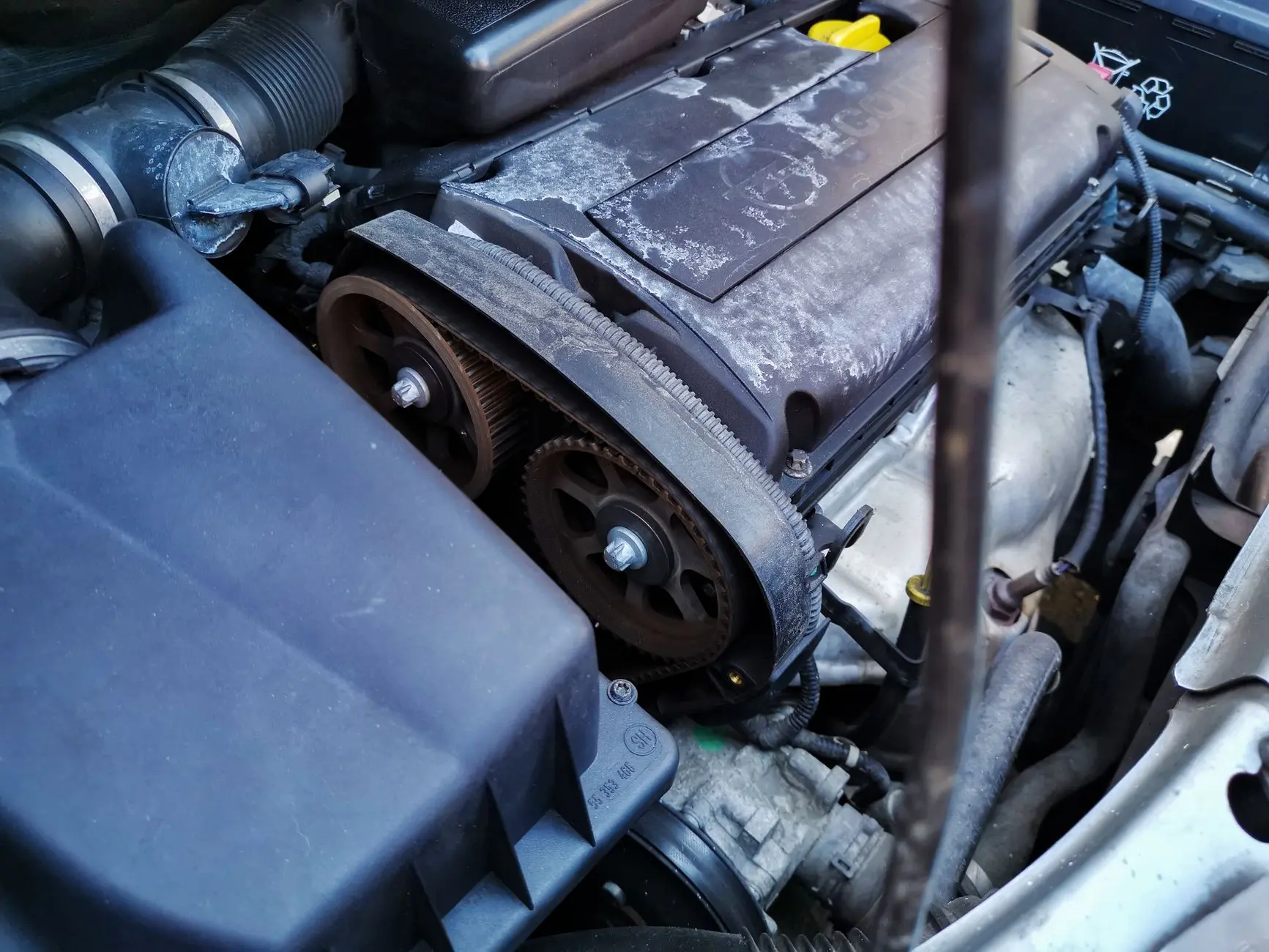
The timing belt keeps your engine’s crankshaft and camshaft moving in perfect sync, which controls when the valves open and close in relation to the pistons. If that timing is off even slightly, the engine can misfire, lose power, or in worse cases, suffer internal damage. The belt is made of reinforced rubber, and like any rubber part, it degrades with heat, age, and mileage, regardless of how carefully you drive.
What are the warning signs of a failing timing belt?
A ticking or slapping noise from the front of the engine is usually the first sign something’s wrong. Other red flags include engine misfires, rough idling, oil leaking near the timing belt cover, or the engine failing to start at all. Unfortunately, many timing belts fail with little to no warning, which is exactly why mileage-based replacement matters more than waiting for symptoms.
Common Symptoms Checklist
| Symptom | What It Might Mean |
|---|---|
| Ticking noise at idle | Worn belt or tensioner |
| Engine won’t turn over | Possible belt snap |
| Oil leak near belt cover | Failing seal, accelerates wear |
| Rough idle or misfire | Belt has slipped a tooth |
How often should you replace a timing belt?
Most manufacturers recommend replacement somewhere between 60,000 and 100,000 miles, but the exact number depends entirely on the make and model. Older vehicles from the 1990s and early 2000s often sit at the lower end of that range, while newer engines are built to stretch closer to 100,000 miles. The owner’s manual is the most reliable source, since interval differs not just by brand but often by engine variant within the same brand.
Time matters as much as mileage. A belt that’s seven or eight years old can dry out and crack even on a low-mileage car that’s mostly been sitting in a garage. If your vehicle is approaching either the mileage or age threshold, it’s worth having a mechanic inspect the belt regardless of how it looks from the outside.
What happens if a timing belt breaks while driving?
The outcome depends on whether your engine is an \”interference\” or \”non-interference\” design. In an interference engine, the pistons and valves occupy the same space at different points in the cycle, so a snapped belt means they collide, bending valves and sometimes damaging pistons or the cylinder head. That kind of repair can run into the thousands of dollars, often rivaling the cost of a used engine.
In a non-interference engine, there’s enough clearance that a broken belt simply stops the engine without causing internal damage. You’ll still be stranded and need a tow, but the repair bill stays far more reasonable. Most mechanics can tell you in seconds which type your engine is.
How much does timing belt replacement cost?
Expect to pay somewhere between $500 and $1,200 for a full timing belt replacement, including parts and labor. The wide range comes down to labor intensity, since some engines require removing the engine mounts or other components just to access the belt, which adds hours to the job. Luxury and performance vehicles tend to sit at the higher end, while common economy cars are usually cheaper to service.
Typical Cost Breakdown
| Vehicle Type | Estimated Cost Range |
|---|---|
| Compact/economy car | $400 – $650 |
| Midsize sedan/SUV | $600 – $900 |
| Luxury/performance vehicle | $900 – $1,200+ |
Should you replace the water pump at the same time?
Yes, in most cases it makes sense, since the water pump is often driven by the same timing belt and sits right next to it. Replacing both at once adds a modest amount to the bill but saves you from paying for the same labor twice down the road if the water pump fails a year or two later. Many shops bundle this as a standard package, along with the tensioner and idler pulleys, since these parts wear out around the same mileage anyway.
Timing belt vs timing chain: what’s the difference?
A timing chain is made of metal and generally lasts the life of the engine, while a timing belt is rubber-based and needs scheduled replacement. Chains are quieter in theory but can stretch over time and require their own maintenance, including guides and tensioners that wear out. Belts are cheaper to manufacture and run quieter when new, but they come with a hard expiration date that owners need to track.
| Feature | Timing Belt | Timing Chain |
|---|---|---|
| Material | Reinforced rubber | Metal |
| Typical Lifespan | 60,000 – 100,000 miles | Often lasts engine’s lifetime |
| Maintenance Needed | Scheduled replacement required | Occasional tensioner/guide checks |
| Failure Risk | Can snap without warning | Usually stretches gradually, rarely snaps |
| Cost to Replace | $500 – $1,200 | $1,200 – $2,000+ (less common) |
Bottom Line
A timing belt doesn’t give much notice before it fails, which is why sticking to the manufacturer’s recommended interval matters more than waiting for symptoms to show up. Replacing it on schedule, ideally along with the water pump and tensioner, costs a fraction of what you’d pay if the belt snaps on an interference engine. Check your owner’s manual, note the mileage and age of your belt, and budget for the service before it becomes an emergency repair on the side of the road.