Toyota is a Japanese company, but most Toyotas sold in the United States never touch Japanese soil. The badge says Toyota but the build sheet often says Kentucky, Texas, Indiana, or Ontario.
Toyota Motor Co., Ltd. was founded on August 28, 1937, by Kiichiro Toyoda, spinning off from his father’s loom manufacturing business. Today the company builds vehicles at plants across roughly two dozen countries, and its philosophy since the 1980s has been simple: build where you sell. That’s why the company most people picture as “Japanese” runs 10 manufacturing plants inside the United States alone, plus major operations in Canada and Mexico.
Here’s the full picture: every US plant and what it builds, which models still come from Japan or elsewhere, how to check any specific vehicle’s origin yourself, and what’s actually changed recently.
Where Are Toyota Cars Manufactured?
Where are Toyotas made? Toyota manufactures cars in 27 countries across four continents. Its main production hub is Japan, where 16 factories build flagship models like the Land Cruiser, Camry, and Prius.
Outside Japan, Toyota’s largest plants are in the United States and Mexico, which produce high-demand models such as the RAV4 and Tundra.
Toyota also has manufacturing operations across Asia (Indonesia, Thailand, India, China, the Philippines), Europe (the UK, France, Turkey), Africa (South Africa, Kenya), and the Americas (Canada, Argentina). This global footprint lets Toyota meet regional demand while keeping consistent build quality across markets.
Toyota Production Network
| Continent | Country/State |
|---|---|
| Asia | Japan, China, Taiwan, India, Indonesia, Malaysia, Pakistan, Philippines, Thailand, Vietnam |
| North America | Canada, USA/ Kentucky, Indiana, Texas, Mississippi, Alabama, West Virginia |
| Europe | France, Austria, Czech Republic, Portugal, Turkey, United Kingdom/ Derbyshire, North Wales, Nord-Pas-de-Calais |
| Oceania | Australia |
| Africa | Kenya, South Africa, Egypt |
Which Toyotas Are Made In The US?
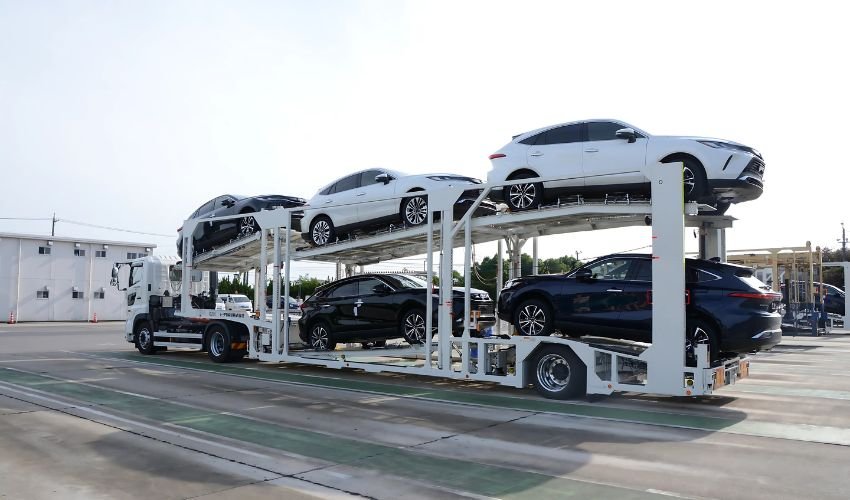
Over the years, Toyota has established a strong manufacturing presence in the United States, manufacturing some of the most popular models in-house.
The notable ones include the Toyota Camry, which is primarily assembled at the Toyota Motor Manufacturing plant in Georgetown, Kentucky. The Toyota Corolla is also built in the U.S., specifically at the Toyota Motor Manufacturing facility in Blue Springs, Mississippi.
The US also manufactures the Toyota Highlander and Sequoia in Princeton, Indiana, while the Toyota Tundra and the Tacoma are assembled at the company’s San Antonio, Texas plant.
The minivan Toyota Sienna offering a hybrid powertrain, is assembled there as well. In addition, it produces the Toyota Grand Highlander, which features higher capacity compared to the Highlander in Indiana. This local manufacturing means a higher appeal for these models among U.S. consumers as well as better resale value because of the domestic production.
Toyota’s US Manufacturing Plants Today
| State | Plant | Models Built | Notes |
|---|---|---|---|
| Kentucky | Toyota Motor Manufacturing Kentucky (Georgetown) | Camry, Camry Hybrid, RAV4 Hybrid, plus 4-cylinder and V6 engines | Toyota’s largest plant in the world; roughly 550,000 vehicles per year |
| Indiana | Toyota Motor Manufacturing Indiana (Princeton) | Highlander, Grand Highlander, Sienna | Also builds engines for other Toyota plants |
| Texas | Toyota Motor Manufacturing Texas (San Antonio) | Tundra, Sequoia | Sequoia moved here from Indiana starting with the 2023 model year |
| Mississippi | Toyota Motor Manufacturing Mississippi (Blue Springs) | Corolla | A hybrid Corolla is being added here under a 2025 investment (below) |
| Alabama | Toyota Motor Manufacturing Alabama (Huntsville) | Engines only, no complete vehicles | Casts and machines engine blocks for trucks and SUVs |
| Alabama | Mazda Toyota Manufacturing USA (Huntsville, joint venture) | Corolla Cross | Opened 2021; Toyota’s newest assembly line before the battery plant |
| West Virginia | Toyota Motor Manufacturing West Virginia (Buffalo) | Engines, transmissions, hybrid transaxles | No complete vehicles; roughly 2,000 employees |
| North Carolina | Toyota Battery Manufacturing North Carolina (Liberty) | Hybrid and EV batteries | Toyota’s newest and 10th US plant; began production in 2025 |
| California | TABC, Inc. (Long Beach) | Truck beds and parts | Toyota’s longest-running North American operation, dating to 1972 |
| Missouri / Tennessee | Parts and components plants | Various supporting parts, not final assembly | Round out Toyota’s 10-plant US footprint |
A car doesn’t have to be assembled in the same building where its engine or battery was made. The Kentucky and Indiana plants build engines that ship to other assembly lines, and the West Virginia plant supplies transmissions and hybrid transaxles across the network. “Made in the USA” for a Toyota usually means American-built from several different American plants, not one factory doing everything.
A Quick History: How Toyota Ended Up Building Cars in America
Toyota’s first production car, the Model AA, rolled off the line in Koromo, Japan, in 1936, a year before the company was formally incorporated.
Toyota’s first American production line wasn’t the one most people assume. In 1984, Toyota entered a joint venture with General Motors called NUMMI (New United Motor Manufacturing, Inc.) at a former GM plant in Fremont, California, building Corollas and Chevrolet Novas side by side. That arrangement ran until 2010, when GM exited and Toyota wound down its involvement not long after.
Toyota’s first wholly owned US assembly plant broke ground in Georgetown, Kentucky in May 1986, and the first Camry rolled off that line in May 1988. Everything described below grew out of that decision.
Toyota’s Canada and Mexico Plants
Toyota’s North American footprint doesn’t stop at the US border.
Toyota Motor Manufacturing Canada, in Cambridge, Ontario, builds the Corolla and RAV4 for the North American market, alongside Lexus models.
Toyota Motor Manufacturing de Guanajuato, in central Mexico, builds the Tacoma. This is a change worth flagging directly: the Tacoma was built in San Antonio, Texas through 2021, but that production consolidated to Mexico so the San Antonio plant could focus entirely on Tundra and, later, Sequoia. If you’re shopping for a Tacoma expecting a “Texas-built” truck, that hasn’t been accurate since the 2022 model year.
Which Toyota Models Still Come From Japan (or Elsewhere Abroad)
Not every Toyota sold in North America is North American-built. Several models are still imported, mostly from Japan:
- Prius and Prius Prime – built at the Tsutsumi Plant in Aichi Prefecture, Japan
- Land Cruiser – built in Japan, split across the Tahara and Yoshiwara plants depending on generation and trim
- 4Runner – built at the Tahara Plant in Japan
- Mirai (hydrogen fuel-cell sedan) – built at the Motomachi Plant in Japan
- GR86 – built at Subaru’s Gunma plant in Japan, a legacy of Toyota and Subaru’s joint development of the car
A couple of notes on models that have shifted recently: the GR Supra was built by Magna Steyr in Graz, Austria, alongside the BMW Z4 it shared a platform with, but Toyota ended Supra production entirely in March 2026, so it’s no longer in production anywhere. The C-HR and Yaris were both built abroad (Turkey and France, respectively) during earlier years, but neither is currently sold as a Toyota-badged model in the US market, so don’t assume either import route still applies if you’re shopping today.
The takeaway: lineups change more often than people expect. A model built abroad two years ago may be built domestically now, or may not be sold in the US at all anymore. Don’t rely on a general guide, including this one, as the final word for a specific car you’re about to buy.
How to Check Where Your Specific Toyota Was Built
The only way to know for certain where an individual vehicle was assembled is to check its Vehicle Identification Number (VIN). The first character tells you the country of final assembly:
| First VIN Character | Country |
|---|---|
| 1, 4, or 5 | United States |
| 2 | Canada |
| 3 | Mexico |
| J | Japan |
| K | South Korea |
| L | China |
| W | Germany |
| S | United Kingdom |
| V | France or Spain |
| Y | Sweden |
| Z | Italy |
| 6 or 7 | Australia or New Zealand |
| 8 or 9 | South America |
Two important caveats. First, this identifies the country of final assembly, not where the parts came from or where the company is headquartered. A Toyota built in Kentucky starts with “1,” same as a Ford or a BMW built in the US.
Second, most countries actually occupy a two-or-three-character range within the World Manufacturer Identifier (the first three characters together), so the single first letter is a reliable shortcut but not a substitute for a full VIN decode if you need certainty. Your dealer, a free online VIN decoder, or the vehicle’s window sticker (Monroney label) will give you the precise assembly plant and parts-content breakdown.
Also Read: Toyota Aristo 2JZ
Are Japanese-Built Toyotas Better?
This comes up constantly, and the honest answer is: not much, in terms of reliability.
Toyota holds every plant in its global network to the same quality standards regardless of country, and no reliable data is showing a meaningful reliability gap between a Toyota built in Kentucky and one built in Japan.
The only difference you might find is the interior quality; Japanese-assembled models feel definitely better compared to the US. The attention to detail is visible with better panel gaps, alignment, and overall finish.
However, these often go unnoticed by the average consumer, since Toyota has strict quality standards for any vehicle produced at any location. Thus, while there may be preferences for Japanese-built models among car buyers, the overall reliability and quality of Toyota vehicles remain commendable across the board.
“Made in USA” Doesn’t Always Mean What You’d Expect
Cars.com’s American-Made Index (AMI) is the most widely cited third-party ranking of which vehicles actually contribute the most to the US economy, based on assembly location, US/Canadian parts content, and factory employment relative to production volume.
Toyota placed five models on the 2025 AMI list. The strongest performers were the Corolla Cross Hybrid, Camry, and Grand Highlander, all ranking well inside the top tier of nearly 100 qualifying vehicles.
But here’s the detail that a lot of “Toyota is proudly American-made” marketing tends to leave out: the RAV4 Hybrid, one of the best-selling vehicles in America, ranked dead last on the entire 2025 list, at No. 99 out of 99.
Being assembled in the US doesn’t automatically mean a vehicle scores well on domestic parts content or the other factors AMI weighs. “Built here” and “highly domestic by AMI’s criteria” are related, but not the same claim, and it’s worth knowing the difference before repeating either one as a selling point.
How Many Toyotas Exist Worldwide?
Toyota builds close to 30,000 vehicles a day, and the running total crossed 300 million back in September 2023, roughly 88 years after the company’s first truck came off the line in 1935.
Split that number down the middle and it’s almost even: about 180 million built in Japan, another 120 million assembled everywhere else the company operates. Two years and a record-setting 2025 later, with more than 11 million vehicles produced last year alone, the real figure sits well past 300 million now, climbing by the hour. One car alone carries a big share of that total and you already know the name. “Toyota Corolla”
The Corolla has racked up more than 53 million units since it launched, making it the best-selling nameplate in the history of the automobile, full stop. There’s no live “Toyotas on Earth right now” counter ticking away on Toyota’s homepage, but do the math on current output and the number of Toyotas that have ever rolled off a line, anywhere in the world, is roughly 30,000 vehicles a day worldwide, and the cumulative figure sits well north of 300 million and rising.
Recent Investment: What’s Actually New
In November 2025, Toyota announced a $912 million investment across five US plants (West Virginia, Kentucky, Mississippi, Tennessee, and Missouri) to expand hybrid production capacity, creating roughly 252 new jobs. Part of that investment brings a hybrid-electric Corolla to the Mississippi plant for the first time. This sits inside a broader commitment Toyota has made to invest up to $10 billion in its US operations over the next five years.
Separately, the Liberty, North Carolina battery plant, Toyota’s newest US facility, began production in 2025 and is built to eventually run 14 separate production lines: four dedicated to hybrid batteries and ten to fully electric and plug-in hybrid batteries. Toyota has said it expects the site to eventually employ around 5,000 people.
Jobs and Economic Footprint
Toyota reports more than 48,000 direct employees across its US manufacturing plants, and says its US operations support close to 500,000 jobs in total once dealerships, suppliers, and logistics partners are counted. Since 1986, Toyota has built more than 30 million vehicles on American soil.
For context on how that compares to a competitor pursuing a similar strategy: Honda’s Alabama plant alone produced five of the top 20 vehicles on the 2025 American-Made Index, including the Ridgeline, Odyssey, Passport, Pilot, and Acura MDX. Toyota and Honda are, at this point, running fairly similar playbooks: build the high-volume, mainstream models close to where they’re sold, and keep the low-volume specialty or performance models centralized overseas.
A Note on Tariffs and Trade Policy
Manufacturing location has become a more prominent part of car-buying conversations recently, largely because of shifting US auto tariffs and ongoing debate over reshoring production. Toyota’s decades-long strategy of building close to its biggest markets means it’s generally been better positioned than import-heavy competitors to absorb tariff changes, since a large share of what it sells in the US is also built in the US. That said, tariff policy is an evolving, politically contested area, and specific rates and exemptions change; if that’s a factor in your purchase decision, it’s worth checking current tariff schedules rather than relying on a snapshot from any single article.
Frequently Asked Questions
Toyota is a Japanese brand, but many of its best‑selling models for the U.S. market are assembled in American factories. Over 75% of Toyotas sold in the U.S. are built in North America, with plants in Kentucky, Texas, Indiana, Mississippi, Alabama, and more.
As of 2026, new Toyota Tacomas are built in Mexico at plants in Baja California and Guanajuato.
Yes, currently. All Camry and Camry Hybrid models sold in the US are built exclusively at the Georgetown, Kentucky plant.
Yes. The Prius and Prius Prime are both built at the Tsutsumi Plant in Japan and imported for US sale.
Check the first character of the VIN, located on the driver’s side dashboard, door jamb sticker, registration, or title. A dealer or a free online VIN decoder can confirm the exact assembly plant.
Is Toyota an American or Japanese company? Toyota is a Japanese company, headquartered in Toyota City, Aichi Prefecture. It has manufactured vehicles in the US since the 1980s, but the corporation itself is Japanese.
Is the Toyota RAV4 built in the US? Most RAV4s sold in the US are built at either the Georgetown, Kentucky plant (RAV4 Hybrid) or Toyota’s Cambridge, Ontario plant in Canada.
Is the Toyota Tacoma still built in Texas? No. Tacoma production moved from San Antonio, Texas to Toyota’s plant in Guanajuato, Mexico, starting with the 2022 model year.
Bottom Line
Toyota’s US manufacturing footprint is genuinely large: 10 plants, more than 30 million vehicles built since 1986, and a fresh $10 billion investment commitment underway. But “Toyota” isn’t one answer to “where is it made.” The specific model, and often the specific trim, determines whether you’re looking at a Kentucky-built Camry, a Mexico-built Tacoma, or a Japan-built Prius. If the country of origin matters to your decision, check the VIN on the actual car in front of you rather than a general model name.