
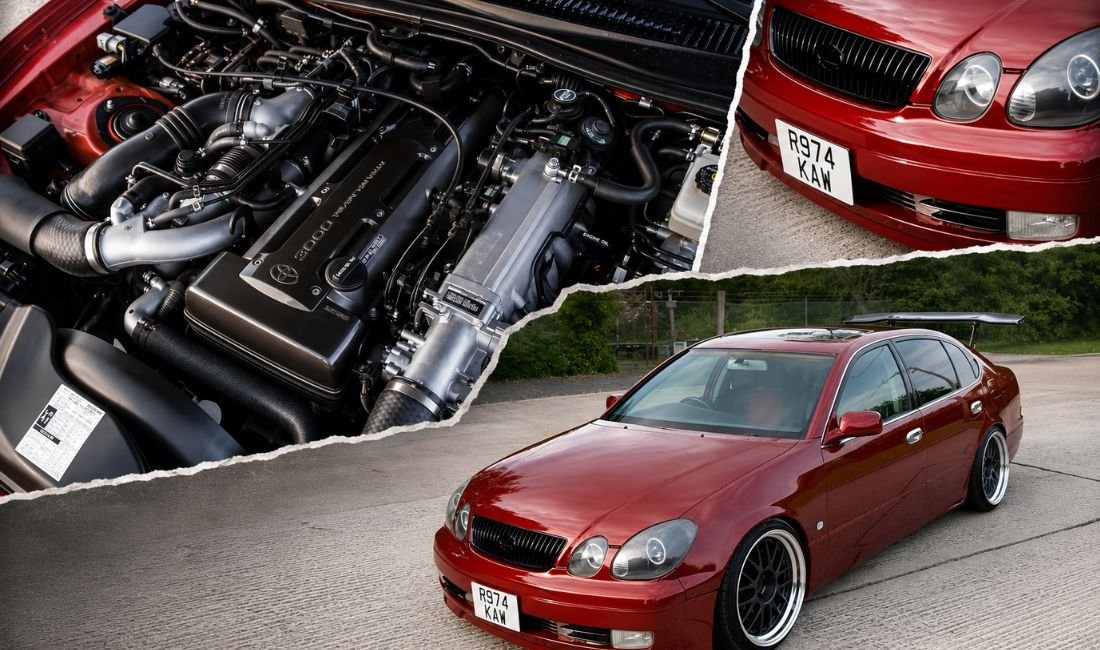

Ask any Supra guy what the greatest engine Toyota ever built is, and you’ll get the same answer before you even finish the question: the 2JZ. What a lot of shoppers forget is that Toyota didn’t build that engine just for the Supra.
It also lived under the hood of a much quieter, far less famous sedan that never officially touched U.S. soil — the Toyota Aristo. Now that enough of these cars have crossed the 25-year import mark, Aristos are showing up on used lots and import broker sites across the country, and the questions landing in my inbox have shifted from “is this thing real” to “how do I buy one without getting burned.”
NEED TO KNOW
- The Toyota Aristo is the JDM twin of the Lexus GS300, sharing most of its platform and drivetrain.
- Two 2JZ variants matter here: the naturally aspirated 2JZ-GE and the twin-turbo 2JZ-GTE found in V300 trims.
- Every Aristo in the U.S. arrived through the 25-year import exemption, so the paperwork deserves as much scrutiny as the engine bay.
- The Japanese auction sheet, not the seller’s description, is the most honest history of the car.
- Most Aristos left the factory with an automatic. A manual example exists, but it’s the exception, not the rule.
What Exactly Is a Toyota Aristo?
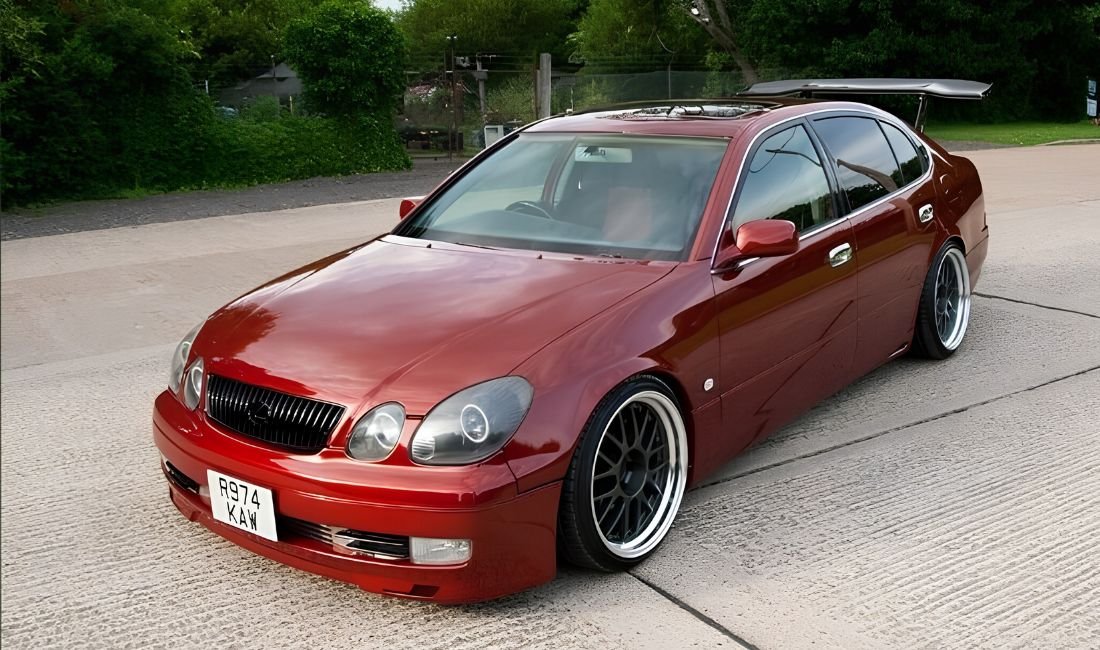
If you’ve never heard the name, that’s by design. Toyota built the Aristo for the Japanese domestic market and exported the same car to the U.S. and other markets under the Lexus badge as the GS300 and GS400. Same bones, same rear-wheel-drive layout, different grille and a different badge on the trunk lid.
What Lexus buyers in America never got, though, was the range-topping V300 trim, which paired the 2JZ-GTE twin-turbo six with the sedan Lexus otherwise kept naturally aspirated. That’s the version enthusiasts are chasing now, and it’s also the version most likely to have a story worth asking about.
Also Check: Best Toyota SUV Models
Buying Checklist for Toyota Aristo 2JZ
Before you hand over money, confirm the basics in order:
Start With the Import Paperwork, Not the Engine Bay
I get why the engine is the first thing everyone wants to talk about. But it shouldn’t be. Because the Aristo was never certified for U.S. sale, every legal example here came in under the federal 25-year import exemption, which frees a car from EPA and DOT requirements once it clears that age threshold.
Before you fall in love with a listing, confirm the car actually has a clean, state-issued title reflecting that import, not a bill of sale, a bonded title, or a “assembled from parts” designation.
2JZ-GE or 2JZ-GTE? Know Which One You’re Looking At
This is where sellers get creative, intentionally or not. The 2JZ-GE is the naturally aspirated version, a fine and honestly underrated engine that will happily run for a few hundred thousand miles without complaint, but it is not the one commanding Supra-swap money, and it never will be.
The 2JZ-GTE is the sequential twin-turbo version found in V300 cars, and it’s the one most buyers actually want, they’d want to keep it right where it is or eventually drop it into something else entirely. Confirm which engine is under the hood by checking the engine code stamped on the block, not just the trim badge on the trunk, since badges get swapped, removed, or simply left on by a previous owner far more often than engines do.
A V300 badge costs about as much as a nice dinner and takes ten minutes to bolt on. Actually verifying the block takes about the same amount of time and tells you the truth.
Read the Auction Sheet Before You Read the Ad
Almost every Aristo sold at a Japanese export auction comes with a graded auction sheet, typically scored on a scale where higher numbers and letters like S or 6 indicate a clean, well-kept car, while an R or RA grade flags prior accident repair. A good importer will hand this sheet over without you asking twice.
If nobody can produce one, or the one you’re shown looks freshly printed and suspiciously perfect, treat that as a reason to slow down, not a reason to assume the worst but also not a reason to assume the best.
Check the Usual 2JZ Trouble Spots
We all know that 2JZ has earned its reputation. It runs a timing chain instead of a belt, which removes one of the more common failure points on aging imports. That doesn’t mean it’s bulletproof from age alone. On twin-turbo cars, listen for shaft play or a whine from the factory CT12A turbos, and watch the tailpipe under boost for smoke that suggests worn turbo seals.
Cast exhaust manifolds on these cars are also known to crack near the turbo flanges after enough heat cycles, so a tick that grows louder under load is worth a mechanic’s attention before it’s worth your money. None of this should scare you off the engine, it should just tell you where to point a flashlight.
Don’t Skip the Chassis
It’s easy to assume a Japanese car spent its life free of rust simply because it’s Japanese. That reputation is earned in some regions and not in others, and a car that spent winters in a snowier prefecture can hide the same kind of corrosion you’d find on a rust-belt trade-in here at home.
Get underneath the car and check the rear subframe, the trunk floor under the spare tire, and the rocker panels before you check anything cosmetic. A fresh coat of touch-up paint over a wheel arch tells you more than the seller probably wants it to.
Transmission: Automatic Is the Rule, Not the Exception
The vast majority of Aristos, twin-turbo included, left the factory with an automatic transmission. A five-speed manual does exist on early first-generation V300 cars, and it’s genuinely rare enough that enthusiasts will pay a premium to find one. If a listing advertises a manual Aristo, confirm it against the chassis and production records rather than taking the word of the ad, because a manual swap after the fact is not the same car the auction sheet was written for.
Also Read: Toyota RAV4 Years to Avoid
Know the Most Common Problems with Toyota Aristo 2JZ Models
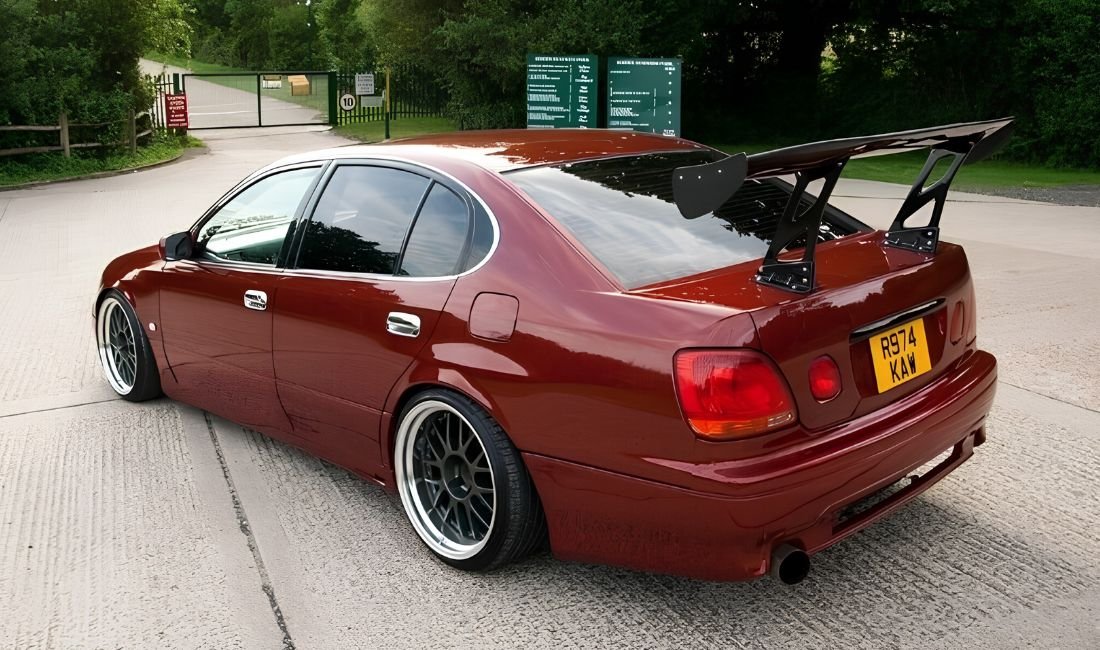
Most of what goes wrong on these cars has less to do with the 2JZ itself and more to do with basic age. Valve cover gasket seepage and a slowly weeping rear main seal are common enough on any 25-plus-year-old six that you shouldn’t treat either as a dealbreaker.
It’s just as a line item to budget for. VVTi-equipped cars, that are known for a light rattle on cold start as the VVTi gear and actuator wear in – something worth listening for during a cold startup rather than after the engine’s already warm and quiet. Other common issues include:
- Turbocharger wear or failure on high-mileage V300 (2JZ-GTE) models.
- Automatic transmission shudder or slip, especially if the fluid hasn’t been changed on schedule.
- Cooling system leaks from aging radiators, hoses, water pumps, and thermostat housings.
- Suspension knocks from worn lower ball joints and bushings, a known weak point shared with the Lexus GS platform.
- Electrical gremlins and sensor faults as the wiring ages, along with occasional hard-start or rough-idle issues on examples that have been tuned or modified without much discipline.
None of this makes the Aristo fragile, it just means the car should be evaluated like the 25-year-old vehicle it actually is, not like a museum piece that happens to still run.
Toyota Aristo 2JZ Maintenance: Service Schedule & Costs
Like most Toyota engines, the 2JZ doesn’t ask for much. Regular oil changes matter more on a car this age than the interval sticker suggests, and I’d lean toward synthetic oil and a shorter interval than factory spec, especially on twin-turbo cars where hot oil is doing double duty cooling the turbos.
The timing chain itself tends to outlast the rest of the car, but the chain guides are worth a listen for rattle as mileage climbs, since replacing them early is a fraction of the cost of replacing them after they’ve let go.
Where costs actually creep up is parts sourcing, not labor. Because the Aristo shares its drivetrain with the U.S.-market Supra, mechanical parts for the 2JZ itself are some of the easiest JDM engine components to find, ironically better supported than plenty of domestic engines from the same era.
Body panels, interior trim, and anything JDM-specific to the Aristo rather than the Supra are the pieces that take longer to source and cost more when you do, so factor that into ownership even if the engine bay itself is refreshingly easy to keep fed.
Aristo 2JZ Price: What Should You Actually Pay for ?
Pricing on these varies more than most used-car categories I cover, since supply is thin and demand is driven almost entirely by Supra and drift culture rather than mainstream shoppers.
A rough, high-mileage 2JZ-GE sedan (S300/3.0V) can still be found in the $5,000–$9,000 range in the U.S. and similar markets, while clean, low-mileage examples and later 2000s JZS160 models often sit around $10,000–$14,000. Twin-turbo V300 2JZ-GTE cars command a clear premium: decent runners typically list between $12,000–$18,000, with well-documented, low-mileage or first-gen manual cars pushing $19,000–$23,000+ depending on condition and provenance.
Whatever number you land on, budget separately for a pre-purchase inspection from a shop that actually knows JDM imports and 2JZ platforms. That inspection will tell you more about the real price of the car than any listing will.
Our Take
The Aristo isn’t a car people buy on impulse. It’s a car people buy because they already know exactly what engine is in it and exactly what they want to do with it, whether that’s keep it stock as a genuine JDM sedan or eventually hand that 2JZ-GTE a new home. Either way, the car deserves the same discipline you’d apply to any 25-plus-year-old import: verify the paperwork first, verify the engine second, and let the auction sheet do the talking before the seller does.
Frequently Asked Questions – Toyota Aristo 2JZ
The 2JZ engine was used in several models including Toyota Supra (MKIV), Toyota Aristo, Toyota Mark II, Toyota Chaser, Toyota Cresta, Toyota Crown, Toyota Altezza/Lexus IS300, Lexus GS300, and Lexus SC300
In the U.S. and similar markets, decent 2JZ-GTE V300 Aristos typically list between $12,000–$18,000, while clean, low-mileage or first-gen manual examples can reach $19,000–$23,000+.
The Toyota Aristo is the JDM (Japan-only) version of the Lexus GS300, but with key differences: the Aristo V300 offered the twin-turbo 2JZ-GTE, while the GS300 used the naturally aspirated 2JZ-GE. The Aristo also had JDM-specific electronics, badging, and interior and suspension differences.
It can be worth it if you want a 2JZ-GTE twin-turbo sedan at a lower price than a Supra, and you’re comfortable with JDM parts sourcing and compliance. Factor in import costs, shipping, registration, and potential repairs (turbos, suspension, timing belt) before deciding.
Check the engine (cold start, smoke, leaks, VVT-i rattle, turbo noise), service history (timing belt, water pump, turbo work), turbo boost (on GTE models), transmission (fluid, shifts, slippage), suspension and brakes (clunks, ARS faults, warped discs), and body for rust or accident damage.